
The government on Tuesday increased the windfall profit tax on crude oil produced in the country and reduced the levy on exports of diesel. The tax, levied in the form of Special Additional Excise Duty or SAED, on domestically produced crude oil was increased to Rs 9,800 per tonne from Rs 9,050 a tonne, according to an official notification. SAED on the export of diesel was reduced to Rs 2 per litre from Rs 4 a litre and on jet fuel or ATF to nil from Rs 1, the notification said.

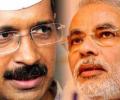
Training his guns on BJP's prime ministerial candidate again over the Reliance gas issue, the Aam Aadmi Party on Friday asked Narendra Modi whether he will bring down the gas price if he comes to power.

In all, 61 companies have been pre-qualified to bid for 11 shallow water and 19 deepwater blocks in an international tender, according to Myanmar's Energy Ministry.
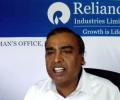
The Delhi high court (HC) division Bench on Thursday sought a response from Reliance Industries (RIL) and others regarding the government's appeal against the Mukesh Ambani-owned conglomerate and others for fraudulently and unjustly enriching themselves by draining gas from their deposits, amounting to over $1.5 billion. The Centre had appealed against the single-judge Bench order of the Delhi HC on May 9, which had dismissed its petition. Justice Anup Jairam Bhambhani had upheld the international arbitration award of July 24, 2018, in favour of the RIL-led consortium. The consortium includes UK-based BP Plc and Niko Resources of Canada.
On instructions from the Prime Minister's Office for a more uniform distribution of the natural resource, the petroleum ministry had in December 2007 scrapped all contracts for sale of gas produced from PMT fields and nominated GAIL for selling it to 'fuel-starved' fertiliser plants outside Gujarat. But after protests, the ministry agreed to partly restore 3.6 million standard cubic meters per day of gas out of 5.1 mmscmd consumed by RIL's petrochemical plants.
Operating margins have been the primary driver of corporate earnings in India in recent quarters, despite revenue growth suffering from weak consumer demand. Companies across sectors have reported a sharp improvement in earnings before interest, tax, depreciation, and amortisation (Ebitda) margins over the past two years, benefiting from lower commodity and energy prices. Higher margins more than compensated for slower revenue growth, resulting in double-digit growth in net profit for five consecutive quarters.

Company is fighting 2 cases- one challenging the new consent mechanism guidelines, another seeking adjudication proceedings on the insider trading case
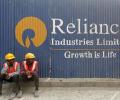
In a nearly 10-year-old case, Sebi on March 24 had banned Reliance Industries and 12 others from equity derivatives trading for one year, while accusing RIL of making 'unlawful gains'.
The tribunal, which had concluded its hearings on two petitions from RIL on January 6 and reserved its order for an unspecified date, set February 24 for the next hearing.

Investors are showing some interest in the downstream energy cycle. Refiners and marketers, especially the public sector (PSU) oil marketing companies (OMCs) could see a revival of marketing margins. Lower crude oil and gas prices may also improve margins in industries like paints, logistics, synthetic fabrics, plastics, and fertilisers. In the medium-term, however, there could be a supply overhang affecting OMCs as new refining capacities are scheduled to be commissioned, especially in China, and this may lead to a drop in the refining margins as capacity would be surplus to demand until and unless there's a pick-up in global growth.

Nearly 90 per cent of the stocks comprising the National Stock Exchange Nifty 500 Index and 49 of the 50 stocks that make up the Nifty50 are trading above their respective 200-day moving averages (DMAs). The 200-DMA is considered one of the most relevant trend indicators by investors and traders. They believe that stocks and indices trading above this key level exhibit strength and are likely to rally, while those trading below this level are viewed as bearish, with the stock/index expected to see a selloff.

Reliance Industries Ltd (RIL) has refuted the allegation in the Supreme Court that it is deliberately reducing production of gas in KG basin in anticipation of a higher gas price and said it has taken all steps for arbitration proceedings with Centre to sort out all disputes.

RBML - the joint venture of Reliance Industries Ltd and supermajor BP - has told the government that fuel retailing for the private sector in India has become unsustainable after market-controlling public sector firms frequently froze petrol and diesel prices at rates way below the cost, sources said. Despite a surge in oil prices, state-owned Indian Oil Corporation (IOC), Hindustan Petroleum Corporation Ltd (HPCL) and Bharat Petroleum Corporation Ltd (BPCL) first froze petrol and diesel rates for a record 137 days beginning early November 2021 when five states including Uttar Pradesh went to the polls, and last month again went into a hiatus that is now 47 days old. "They (Reliance BP Mobility Ltd) has written to the petroleum ministry over the fuel pricing issue," a highly placed source in the government, who didn't want to be quoted, told reporters.
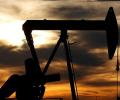
The government has cut the windfall profit tax on crude oil produced in the country while the levy on exports of diesel and ATF has been hiked, an official notification said. The tax, levied in the form of special additional excise duty or SAED, on domestically produced crude oil was reduced to Rs 6,700 per tonne from Rs 7,100 a tonne. SAED on the export of diesel was increased to Rs 6 per litre from Rs 5.50 a litre and on jet fuel or ATF to Rs 4 per litre from Rs 2, the notification said.

The slowdown in corporate revenue growth over the last one year has begun to reflect in India Inc's capital expenditure, or capex. The country's top listed companies are going slow on fresh investment in capacity expansion, in line with a deceleration in their top line growth. The combined fixed assets of the listed companies, excluding banking, finance services and insurance (BFSI) and the government-owned oil & gas firms, were up 10.1 per cent year-on-year (Y-o-Y) during April-September 2023 (H1FY24) - the slowest in 18 months - as against 21.1 per cent Y-o-Y growth in H2FY23 (October 2022-March 2023) and 11.6 per cent growth in the April-September 2022 period (H1FY23).
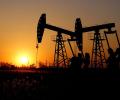
The government has cut windfall gains tax on domestically-produced crude oil to nil while continuing the rate at zero on the export of diesel and ATF. The government has slashed the special additional excise duty (SAED) on crude oil produced by companies such as Oil and Natural Gas Corporation (ONGC) to nil from Rs 4,100 per tonne with effect from Tuesday, an official order dated May 15 said. This is the second time that the levy, which was introduced in July last year in the form of a cess to tax supernormal gains of oil producers and fuel exporters, has been cut to nil for domestically-produced oil.

When Vineet Mittal first got into solar power, sometime around 2009, and was planting solar panels in Gujarat, renewable energy looked like a sector ripe for startups. Renewables were clearly the future of energy, and the big boys - Mukesh Ambani's Reliance, Adani Group, and the Tatas - were focusing much more on coal and petroleum. Little did Mittal know that things were going to change drastically.
Indian Oil Corporation (IOC), Bharat Petroleum and Hindustan Petroleum may post a combined loss of Rs 10,700 crore in June quarter on selling petrol and diesel at rates below cost, a report said on Monday. While the raw material (crude oil) prices soared in April-June, petrol and diesel prices were not revised, leading to marketing losses which offset strong refining margins, ICICI Securities said in the report. The three state-owned oil marketing companies -- IOC, BPCL and HPCL -- control 90 per cent of the retail petrol and diesel sales in the country.

'To sustain our growth trajectory, we must continue to explore and capitalise on growth opportunities.'
Reliance Industries will export about 8-9 million tonnes of petroleum products or 33 per cent of Jamnagar refinery production this fiscal.
.jpg)
At the last hearing on October 11, SAT had suggested to Sebi to look at considering the RIL application for a consent settlement that allows companies and individuals to settle disputes by paying a fine without admission or denial of the alleged wrongdoing.

Benchmark BSE Sensex rallied nearly 630 points while Nifty closed above the 16,500 mark on Wednesday after sharp gains in IT and energy shares amid positive global market trends. Buying in index majors Reliance Industries, Infosys and Tata Consultancy Services and FII inflows bolstered the sentiment. Shares of firms related to oil exploration and refineries were in heavy demand, with Reliance Industries rallying 2.47 per cent and ONGC by 4 per cent, as the government slashed windfall tax on petrol, diesel, jet fuel and crude oil.

RIL-BP currently produce gas from Dhirubhai-1 and 3 field and oil and gas from MA field, three of the over one-and-half dozen discoveries made in KG-D6 block

As oil marketing companies (OMCs) stare at huge under-recoveries, India is facing fuel shortage across the country with states like Rajasthan, Madhya Pradesh, Karnataka Uttarakhand, Gujarat and Haryana being the worst hit. The under-recoveries suffered by OMCs are around Rs 20-25 a litre for diesel and Rs 14-18 a litre for petrol, said sources. Government and state-run companies denied reports of any crisis or supply-side issues on the availability of fuel.

Moody's Investors Service on Wednesday raised the rating outlook for 18 Indian corporates and banks, including Reliance Industries, Infosys, SBI and Axis Bank, to 'stable' from 'negative'. This follows the upgrade by the US-based rating agency in India's sovereign rating outlook to 'stable' from 'negative' on Tuesday. The agency had affirmed the sovereign rating at 'Baa3'.
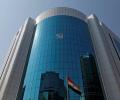
Regulator Sebi on Friday imposed penalties on Reliance Industries Ltd, its chairman and managing director Mukesh Ambani as well as two other entities for alleged manipulative trading in the shares of erstwhile Reliance Petroleum Ltd (RPL) back in November 2007. Fines of Rs 25 crore and Rs 15 crore have been imposed on Reliance Industries Ltd (RIL) and Ambani, respectively. Besides, Navi Mumbai SEZ Pvt Ltd has been asked to pay a penalty of Rs 20 crore and Mumbai SEZ Ltd has been directed to pay Rs 10 crore. The case pertains to sale and purchase of RPL shares in the cash and the futures segments in November 2007.
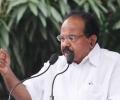
Launching a fresh broadside at Oil Minister M Veerappa Moily, CPI leader and MP Gurudas Dasgupta on Tuesday said no action has been taken against Reliance Industries for deliberately keeping natural gas output low and is instead being rewarded by a steep hike in prices.

India's corporate sector is likely to report a slowdown in revenue growth and earnings for the July-September 2023 period (Q2FY24), according to earnings estimates by brokerages, after the country's top listed companies posted higher than expected profits for the first quarter. The combined net profit of Nifty50 companies, based on brokerage estimates, is expected to have grown by 19.6 per cent year-on-year (Y-o-Y) to Rs 1.75 trillion in Q2FY24 - a sharp deceleration from 37.6 per cent Y-o-Y growth in the combined earnings of index companies in the April-June 2023 period. According to estimates, the combined earnings in the second quarter would be down 8.8 per cent on a quarter-on-quarter (Q-o-Q) basis and the lowest in the past three quarters.

The committee said whatever benefit RIL received in terms of the migrated gas is liable to be returned to the government.

With the objective of making India a manufacturing hub for domestic and foreign companies, Prime Minister Narendra Modi on Thursday launched the 'Make in India' initiative.
The windfall taxes on domestic crude oil production and fuel exports will generate close to $12 billion (Rs 94,800 crore) for the government in the remainder of the current fiscal while trimming profits of firms such as Reliance Industries Ltd and ONGC, Moody's Investors Service said Tuesday. On July 1, the government imposed windfall gain taxes on the export of petrol, diesel and aviation turbine fuel (ATF), and on the domestic production of crude oil. It has also mandated exporters to meet the requirements of the domestic market first.

The government has brought back the windfall profit tax on domestically produced crude oil after international prices firmed up while the levy on export of diesel has been cut to nil, according to an official order. The levy on crude oil produced by companies such as Oil and Natural Gas Corporation (ONGC) is now Rs 6,400 per tonne with effect from Wednesday, the order dated April 18 said. At the last revision on April 4, windfall tax on domestically produced crude oil was cut to nil as international oil prices dipped below $75 per barrel.
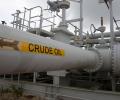
The basket of crude oil that India buys has hit a decade high of $121 per barrel, but retail selling prices of petrol and diesel continue to remain frozen. The Indian basket on June 9 touched $121.28, matching levels seen in February/March 2012, according to data available from the oil ministry's Petroleum Planning and Analysis Cell (PPAC). As per the PPAC, the Indian basket of crude oil averaged $111.86 per barrel between February 25 and March 29 - the immediate period after Russia's invasion of Ukraine sent oil on fire.

Earlier this week, the ministry had come out with a clarification, saying domestic gas producers had to stick to the earlier price of $4.2 a unit until a further notification from the new government.
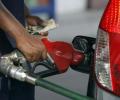
A looming global shortage of diesel in Europe presents India with more than one opportunity to profit from strong margins. A shortage of the fuel, a key contributor to inflation, has been exacerbated by the conflict in Ukraine, and western sanctions on Russian fuel supplies. The slowdown in natural gas supply means the West needs diesel to heat their homes this winter.

Privatisation of BPCL, which was dubbed India's biggest ever, has been stalled with just one bidder left in the fray after two others walked out over issues such as lack of clarity in fuel pricing, a top source said. The government had planned to sell its entire 52.98 per cent stake in Bharat Petroleum Corporation Ltd (BPCL) and invited Expression of Interest from bidders in March 2020. At least three bids came in by November 2020 but only one remains now after the others withdrew from the race.

Equity benchmark Sensex slumped over 1,000 points to sink below the 55,000-level on Friday, tracking deep losses in IT, finance, banking and energy stocks amid widespread selling in the global markets. A weak rupee, surging crude prices and relentless foreign capital outflows further weighed on sentiment, traders said. The 30-share BSE index ended 1,016.84 points or 1.84 per cent lower at 54,303.44.
